 Reviews


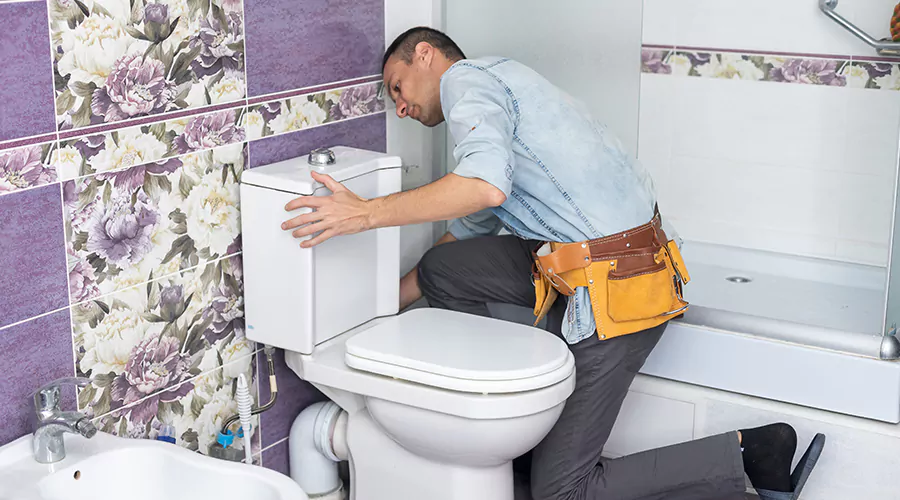
Most commode repair jobs come down to five parts that cost under $30 combined. Meanwhile a minor toilet leak can cost you $1,000 a year in water charges, and a constantly running toilet can double that.
Plumbers charge $150 to $400 for typical repairs, with most homeowners paying around $250 to $300 in 2026. Nearly every fix below sits within reach of a screwdriver and twenty minutes.
The parts inside a tank haven't changed in decades. Learn what each one does and the repair diagnoses itself.
Stop a Commode That Keeps Running
A commode keeps running when the flapper fails to seal the tank's drain hole, and a worn flapper, a faulty fill valve or a float set too high cause almost every case. The flapper costs $5 to $15 and swaps in minutes.
- Timing narrows the diagnosis fast: Brief toilet running after flushing is normal for 30 to 60 seconds of refill. If the toilet keeps running after flush water reaches the fill line, the float sits too high and the overflow tube is draining the excess, so pinch the float clip and lower it an inch.
- Persistent cases point past the flapper: A toilet that won't stop running with a brand-new flapper has a worn fill valve, which costs $60 to $150 replaced or about $15 as a DIY part. If you've reached the stage of thinking my toilet won't stop running no matter what I try, replace the flapper and fill valve together and the problem ends.
Insider tip: put ten drops of food coloring in the tank and wait 15 minutes without flushing. Color in the bowl proves a flapper leak even when you can't hear one.
Fix a Toilet That Will Not Flush
- A toilet will not flush for one of four reasons: a disconnected chain, a closed supply valve, an empty tank or a full clog. Check them in that order. The first three take under a minute each with the tank lid off.
- Start at the handle: The complaint my toilet won't flush usually ends at a chain that slipped off the flush lever, so hook it back on with one inch of slack. Water comes next, because a commode won't flush without a full tank, and a supply valve bumped closed during cleaning is a common silent cause. Toilet Repair can address these common flushing problems when a simple adjustment doesn't solve the issue.
- Clogs behave differently: When the toilet bowl won't flush yet the tank empties normally, the blockage sits in the trap, so plunge with a flange-style plunger for 20 firm strokes. A toilet bowl not flushing after a proper plunge needs a toilet auger, and a drain snake is safe for porcelain when used gently.
Insider tip: pour a bucket of water into the bowl from waist height. A normal flush means the tank side is the problem. No flush means the drain is.
Restore a Weak or Slow Flush
A toilet won't flush all the way when too little water enters the bowl or enters it too slowly. Tank level and rim jets control both. Neither fix requires removing the toilet or buying parts.
- Level first: Look for the fill line stamped inside the tank and raise the float until water reaches it, since a low tank starves every flush. Jets second: a toilet not fully flushing despite a full tank has mineral-clogged rim holes under the bowl's edge, so scrub them with a wire brush and vinegar.
- The pattern tells you which fix applies: Toilet flushing slow and getting slower over months means mineral buildup rather than a sudden clog. A partial trap clog behaves the opposite way and arrives overnight.
Insider tip: hold a small mirror under the rim to see the jets. Blocked holes show white or orange crust you can feel with a bent coat hanger.
Fix a Leaky Toilet Tank
Water on the floor behind the bowl usually falls from the tank rather than the base. Three seals live back there: two bolt washers and one spud washer between tank and bowl. All three cost under $15 as a kit.
- Rust is the confession: A commode leaking at tank bolts leaves rusty streaks running down the back of the bowl below each bolt. To fix leaky toilet tank problems, shut off the supply, drain and hold each bolt with a screwdriver while loosening the nut below, then install new brass bolts with fresh rubber washers.
- Condensation fakes this leak in summer: A cold tank in humid air sweats enough to puddle, so tape a dry tissue to the tank's lowest point and check it in an hour. A wet tissue with tight bolts means sweat rather than a seal.
Stop a Toilet That Leaks When Flushed
A toilet leaks when flushed but stays dry between flushes because the wax seal under the base only handles water during the flush surge. Water at the base with every flush means the ring has failed. Wax ring reseating costs $150 to $275 from a plumber or about $20 in parts yourself.
The DIY toilet wax ring replace job runs about an hour:
- Shut off the supply, flush and sponge the tank and bowl dry.
- Disconnect the supply line and unbolt the two closet bolts.
- Lift the toilet straight up with a helper and set it on cardboard.
- Scrape every trace of old wax off the flange and the toilet horn.
- Press the new ring onto the flange, set the toilet straight down and rock it gently to seat.
- Snug the bolts alternately without cranking, since porcelain cracks before it bends.
Check the flange while the toilet is up. A cracked or corroded flange defeats any new ring, and commode flange repair costs $145 to $165 including labor or under $20 with a stainless repair plate. Skipping this check is the main reason toilet wax seal replacement jobs fail twice.
Insider tip: a toilet that rocks when you sit points to loose bolts, a dead wax ring or a damaged flange. Fix the rocking or the new ring dies young.
Changing the Flush Handle
Handle problems are the cheapest fix in plumbing. Changing toilet flush handle hardware takes ten minutes and a $10 universal kit. The only trick is the nut inside the tank, which threads backward.
Turn that inner nut clockwise to loosen it, slide the old lever out and reverse the steps with the new one. Before replacing anything, you can often repair a toilet flush that needs two presses by simply shortening the chain one link.
What Commode Repair Costs in 2026?
Commode repair pricing splits cleanly between DIY parts and professional labor. Simple fixes like a flapper run $60 to $120 from a pro, wax ring work runs $150 to $300 and flange or drain jobs reach $500 to $800. The table shows both columns.
| Repair | DIY parts | 2026 pro cost |
|---|---|---|
| Flapper | $5 to $15 | $50 to $120 |
| Fill valve | About $15 | $60 to $150 |
| Running toilet overall | Under $30 | $100 to $400 |
| Wax ring reseat | About $20 | $150 to $275 |
| Flange replacement | $20 plate | $145 to $165 |
| Clog clearing | $15 plunger | $85 to $600 |
Timing matters too. Emergency after-hours service adds a 30% to 50% premium to any of these numbers.
When to Call a Professional?
Match the job to the license and you'll never overpay. Hire a licensed plumber for wax ring work, flange repair, supply-line or shutoff valve jobs and recurring clog diagnostics. A handyman handles flappers, fill valves, handles and seats.
- Recurring clogs deserve special respect: Deep obstructions in the drain line need specialized equipment like hydro-jetting, and a toilet that clogs weekly is reporting a drain problem rather than a toilet problem.
- Age can end the repair conversation entirely: Replacing a pre-1994 toilet with a modern 1.28 gallon-per-flush model saves roughly 13,000 gallons a year for a family of four, so a third repair on a 25-year-old unit is money aimed backward.
Prevention Keeps the Lid On
Four habits prevent nearly every repair above. Together they cost about $10 a year against a $250 average service call. The flapper and the flange do most of the failing, so most of the prevention aims there.
- Skip in-tank cleaner tablets: The chemicals sit against the flapper and rot the rubber early.
- Run the dye test twice a year: Silent flapper leaks show up in minutes.
- Snug the base bolts each spring: A firm toilet never grinds its wax ring.
- Keep a flange plunger by every toilet: Fast plunging stops small clogs from packing tight.
Conclusion
Every toilet problem routes through the same five parts: flapper, fill valve, chain, wax ring and flange. Diagnose from the symptom, swap the cheap part and save the plumber for flange and drain work. This week, run the food coloring test on every toilet in the house and catch the leaks you can't hear.